

Introduction
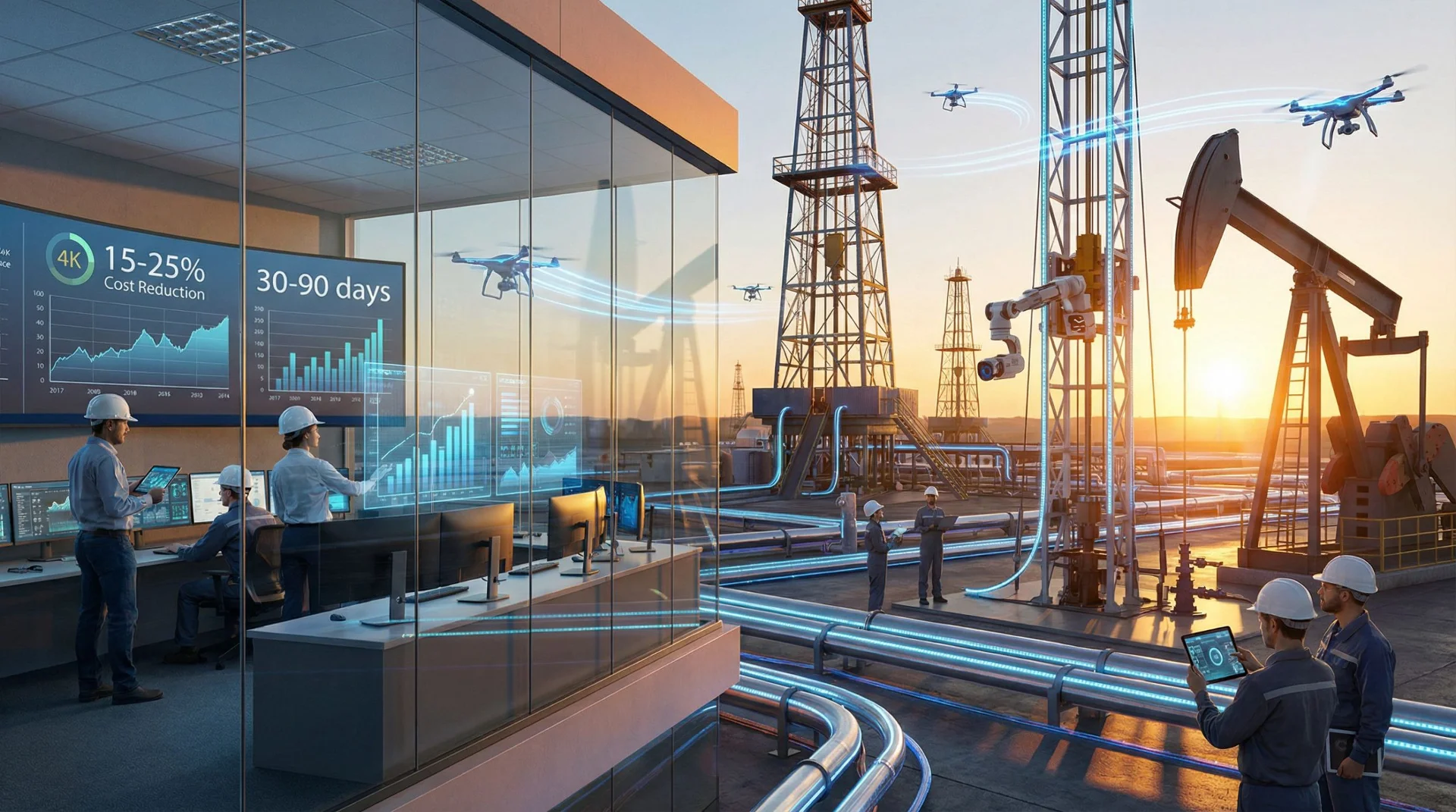
The oil and gas industry has always been at the forefront of technological innovation. From seismic imaging to offshore drilling, technology has enabled companies to explore deeper, produce more efficiently, and operate more safely. Today, as global energy demand evolves and sustainability pressures mount, digital transformation is reshaping the sector at an unprecedented pace.
Key Technologies Transforming Oil & Gas
1. Artificial Intelligence (AI) & Machine Learning
AI is revolutionizing exploration, drilling, and refining by analyzing massive datasets to predict equipment failures, optimize drilling paths, and improve reservoir management. Machine learning models can forecast demand, detect anomalies in pipelines, and even automate trading decisions.
2. Internet of Things (IoT) & Edge Computing
Connected sensors on rigs, pipelines, and refineries provide real-time monitoring of pressure, temperature, and flow. Edge computing ensures data is processed instantly at the source, enabling predictive maintenance and reducing downtime.
3. Digital Twins
Digital twins create virtual replicas of physical assets — from wells to entire refineries. Operators can simulate scenarios, test safety measures, and optimize performance without disrupting real-world operations.
4. Robotics & Automation
Advanced robotics are deployed for hazardous tasks such as pipeline inspections, underwater welding, and refinery maintenance. Robotic Process Automation (RPA) also streamlines back-office operations like compliance reporting and supply chain management.
5. Blockchain
Blockchain technology is enhancing transparency and security in oil trading, supply chain logistics, and compliance. Smart contracts reduce fraud and ensure faster, more reliable transactions.
6. Augmented Reality (AR) & Virtual Reality (VR)
AR/VR tools are used for training workers in complex environments, guiding field technicians with real-time overlays, and simulating emergency scenarios safely.
Industry Trends & Opportunities
- Energy Transition: While renewables are growing, hydrocarbons remain critical for global energy security. Technology helps oil and gas companies reduce emissions and operate more sustainably.
- Digital Oilfields: Integrated platforms combining analytics, cloud computing, and IoT are expected to surpass $20 billion in market value by 2025, enabling smarter, more resilient operations.
- Operational Resilience: Automation and compliance tools help companies adapt to regulatory changes and market volatility.
Benefits of Technology Adoption
- Efficiency Gains: Faster drilling, optimized production, and reduced downtime.
- Cost Reduction: Predictive maintenance and automation lower operational expenses.
- Safety Improvements: Robotics and remote monitoring reduce human exposure to dangerous environments.
- Sustainability: Digital tools help track emissions, optimize energy use, and support net-zero goals.
Conclusion
Technology is no longer optional in the oil and gas industry — it is the backbone of modern operations. From AI-driven exploration to blockchain-secured trading, digital innovation is enabling companies to remain competitive, resilient, and sustainable in a rapidly changing energy landscape.
The future of oil and gas lies not just in extracting hydrocarbons, but in extracting insights from data — and those who embrace this transformation will lead the next energy revolution.
Other articles

Honeywell: AI’s Role in Energy Transformation: Takeaways from Anant Maheshwari
Tasafi Strengthens Presence in Iraq’s Oil & Gas Sector with Strategic Projects at Majnoon Oilfield
Three Ways Automation is Shaping Today’s Heavy-Duty Vehicles